Browse by category
The synthesised pulses, sorted into categories. Pick a category, choose a period, and read the summary of what happened, or switch to the raw trending terms underneath.
The period to date in summary · Money & Finance
Reading the period…
All 664
✈️ Travel 13
🧘 Wellness & Health 2
🏟️ Sport 148
🍽️ Food & Drink 6
💄 Beauty & Fashion 2
💸 Money & Finance 30
🤖 Tech & AI 22
🎬 Film & TV 91
🎵 Music 88
🎮 Gaming 127
🗞️ News & Politics 67
🛍️ Shopping & Retail 10
😹 Internet & Memes 28
🌐 Other 10
❓ Unclassified 20
30 pulses in Money & Finance, most recent first.
💸 Money & Finance
2026-06-13
to the moon, literally
What happened
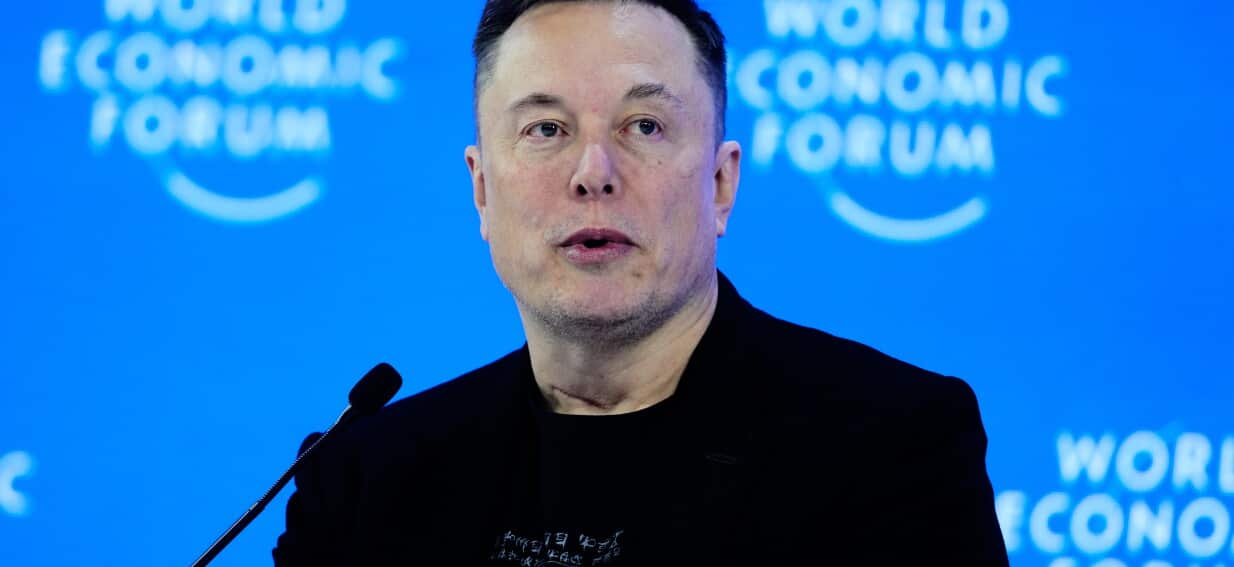
Elon Musk is now the first trillionaire in history after SpaceX's Nasdaq debut, the biggest IPO ever, with the stock up 19% and valuation pushing $3 trillion. SBS ran it straight as a history-made line, the AFR called it a "Goldilocks IPO" that "changed markets forever" and noted Aussie fund managers (Munro Partners) are on the rocket, and "tesla" is trending as a brand entity in AU cultural conversation. This is the Tech Giant IPO Fever current hitting its loudest note, and it lands the same week BofA is warning Australian house prices keep falling. One man's net worth went vertical while the average Aussie's biggest asset slid.
Why now
The trillionaire headline is a once-off cultural marker, and it collides with a very Australian anxiety, property going backwards, making the wealth-gap contrast impossible to miss.
💸 Money & Finance
2026-06-13
out of bricks, into what
What happened
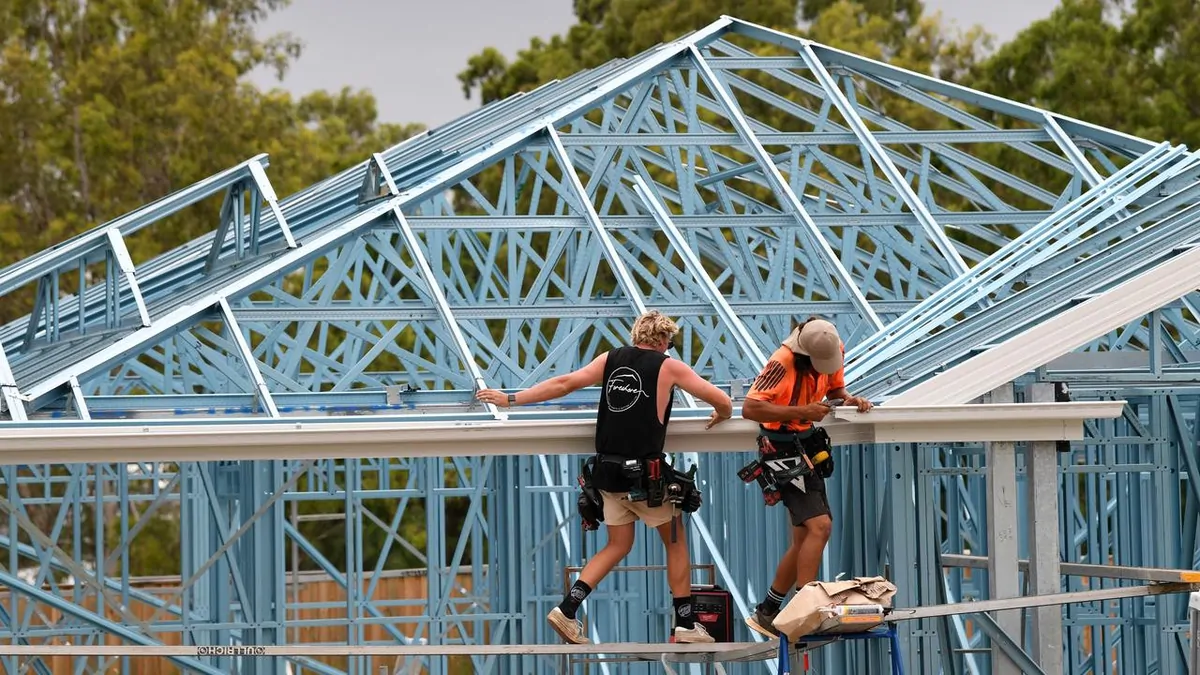
The great Australian property certainty is wobbling and the conversation is shifting from "will prices fall" to "so where do I put my money instead." BofA economists warning prices keep falling is trending on r/australia, The Nightly reports the public housing crisis is actually worsening under current policy, and SBS's money round-up says Aussies are rethinking property as the default place for savings. Three independent reads, Reddit, The Nightly, SBS, all pointing the same way: the national obsession with real estate as the safe bet is genuinely under question, and people are actively looking for the alternative.
Why now
"Property always goes up" was an article of faith, and the moment it cracks, every Australian under 45 who'd given up on owning starts asking what the new plan is.
💸 Money & Finance
2026-06-08
gearing up for a fight
What happened
'Negative gearing' is trending nationally on Google AU at holiday-Monday scale, which takes some doing. The housing-policy debate is back in the news cycle and Australians are refreshing their understanding of the most argued-about tax setting in the country before the dinner-table debates resume. Straight read, jokes off: housing is the national sore point. A single search term on a single platform, hence LOW, but when tax policy out-trends sport on a public holiday, the temperature is rising.
Why now
Policy kites get flown in the winter window, and housing affordability is the standing national argument.
💸 Money & Finance
2026-06-02
pay rise refresh
What happened
'Minimum wage australia' is spiking on Google AU as the Fair Work decision lands in the news cycle, with 'senate estimates' trending alongside it. This is kitchen-table money news: a few million Australians quietly checking what the July 1 pay packet looks like. Single-source (Google Trends only), so flag it LOW, but wage news always converts into spending-mood content within the week. Jokes off on this one: cost of living is a sore spot, not a meme.
Why now
The annual wage review lands in early June and takes effect July 1; the gap between the two is when people do their maths.
💸 Money & Finance
2026-06-09
rate day refresh
What happened
'Interest rate' and 'asx200' are both climbing Google AU as RBA-decision chatter does its monthly lap of the national psyche. Rate-watch has matured into its own content genre: economists as influencers, '11 of 12 experts say' carousels, and a couple of million mortgage holders refreshing at 2.30pm. Straight read here, money stress is not a meme. Single platform, so LOW, but this is the most predictable recurring attention spike in Australian finance.
Why now
RBA decision window: the days around the board meeting are when household-finance attention peaks.
💸 Money & Finance
2026-06-05
THE GROUP CHAT ECONOMICS LESSON
What happened
Australians are actively searching for explanations and opinions on complex topics like 'real estate development,' 'sp500,' 'f1 news,' and 'guild wars 3.' The associated angles – 'explaining this to my group chat,' 'confusion-to-outrage pipeline,' and 'everyone is suddenly an expert' – reveal a strong desire to quickly grasp and formulate strong takes on macro issues and niche interests alike.
Why now
In a saturated information landscape, people are overwhelmed by complexity but still feel a social pressure to be informed and opinionated. This leads to a demand for digestible, often opinionated, summaries that can be easily shared and discussed within personal networks, fostering an 'instant expert' culture.
💸 Money & Finance
2026-06-03
THE 'IT'S FINE' FINANCE HUMOUR
What happened
Australian Google Trends show a surge in searches for 'bitcoin price usd' accompanied by notes of 'cope memes, doom/boom cycles' and the ironic 'I am a long-term investor' (24 hours later). This indicates a growing trend of Australians engaging with volatile financial topics through self-aware, often humorous, fatalism rather than purely serious analysis.
Why now
Amidst persistent economic uncertainty and cost-of-living pressures, and the unpredictable nature of speculative investments like crypto, Australians are finding a collective coping mechanism in humorously acknowledging financial anxieties and market swings. The internet allows for instant, relatable 'doomscrolling' and 'hopium' cycles, creating a shared language around financial vulnerability.
💸 Money & Finance
2026-05-14
THE EVERYDAY DREAM MACHINE
What happened
High search volume for 'Lottery Powerball Jackpot' in Australia, described as 'likely driven by news chatter and curiosity' with the angle of 'everyone is suddenly an expert, trend whiplash, collective confusion'. While framed as a 'confusion' trend, the persistent interest in Powerball points to a deeper, more constant cultural desire for aspirational escape and 'what if' scenarios.
Why now
In economically challenging or uncertain times, the fantasy of a sudden, life-changing windfall offers a low-stakes psychological escape. It taps into universal desires for freedom, security, and the ability to imagine a different future, providing a collective, harmless daydream.
💸 Money & Finance
2026-05-10
THE INSTANT EXPERT ECONOMY
What happened
Multiple AU Google Trends show high search volumes for diverse topics like 'budget,' 'negative gearing in Australia,' 'Sam Altman,' 'Split Enz,' and 'Kylie Jenner.' The accompanying summary angle notes 'everyone is suddenly an expert' and 'collective confusion,' indicating a rapid uptake of information to participate in trending conversations.
Why now
In a fast-paced, information-saturated environment, there's a pressure to be 'in the know' on a wide range of topics, from national economics to celebrity gossip. Search engines become the primary tool for acquiring 'just enough' knowledge to engage in social discourse without needing deep understanding.
💸 Money & Finance
2026-05-07
THE FINANCIAL FRUSTRATION FLEX
What happened
Australian Google Trends show searches for 'melbourne housing price decline' and 'brian armstrong coinbase staff cuts'. While these are serious economic signals, the underlying 'angle' from the broader Google Trends data of 'hype vs reality, price pain, 'upgrade coping strategies'' points to a cultural response where financial anxieties are shared and even humorously 'flexed' online.
Why now
With rising cost of living and economic uncertainty, Australians are increasingly open about financial struggles. This has led to a shift from shame to shared experience, where commiserating, finding 'coping strategies,' or ironically 'flexing' frugality or financial pain becomes a form of relatable content.
💸 Money & Finance
2026-05-02
THE PERFORMATIVE SAVINGS GURU
What happened
The search term 'savings' (GB trend, but highly relevant to AU's cost of living crisis) is noted with the angle 'everyone is suddenly an expert, trend whiplash, collective confusion.' This suggests a cultural moment where personal finance, specifically savings, is a trending topic for public discourse, often involving quick-fire 'expert' takes and a degree of collective anxiety or confusion.
Why now
High inflation and cost of living pressures in Australia (and globally) have pushed personal finance to the forefront of daily conversation. People are actively seeking solutions and sharing advice, often leading to a glut of 'guru' content and conflicting information, mirroring the 'suddenly an expert' trend but specifically for money.
💸 Money & Finance
2026-04-26
THE EVERYDAY ARMCHAIR EXPERT
What happened
Australian Google Trends show high engagement for 'real estate market', 'alice springs', and 'australian financial review'. These are explicitly tagged with 'everyone is suddenly an expert' and 'collective confusion', indicating a public grappling with complex, local issues.
Why now
Amidst economic uncertainty and a relentless news cycle, Australians feel pressure to understand complex financial and social issues, leading to a performative or aspirational desire to be 'in the know', often without deep expertise, creating a unique tension.
💸 Money & Finance
2026-04-25
THE GAMIFIED EVERYDAY SIMULATION
What happened
AU YouTube trending features long-form gaming content like 'Can You Live An Average Life In Skyrim?' and 'Making $10,000,000 in Schedule 1', often with integrated brand sponsorships. This indicates a strong audience appetite for complex, narrative-driven simulation within games, mirroring real-world systems (economy, daily routines) through creator-led challenges.
Why now
As digital realities become more sophisticated and immersive, the line between 'game' and 'life simulation' blurs. Audiences are fascinated by the intersection of mundane realism and fantasy, and how creators navigate these crafted rule-sets, often presenting 'challenges' that reflect real-world aspirations or struggles.
💸 Money & Finance
2026-04-19
THE RELIABLE NOISE FILTER
What happened
Australian Google Trends show searches for 'Wellington flooding today' and '$1,000 automatic tax deduction' are associated with angles like 'trend whiplash' and 'collective confusion'. This indicates a general public overwhelmed by information and seeking clear, concise understanding on urgent or complex topics.
Why now
In an era of constant news cycles and fragmented information, individuals are struggling to discern reliable, relevant facts from noise. There's a high demand for trusted sources that can cut through the complexity and provide 'just the essentials' without sensationalism or jargon.
💸 Money & Finance
2026-04-06
THE ANXIETY ECONOMY'S QUICK FIXES
What happened
Australians are actively searching for information related to 'gyg asx' (finance, with 'cope memes' noted), 'retirement', and 'ai reshaping workforce' (tech, with 'hype vs reality, price pain, upgrade coping strategies'). This indicates underlying economic and future-of-work anxieties.
Why now
Persistent economic uncertainty, rising cost of living pressures, and rapid technological shifts (like AI's impact on employment) are creating widespread anxiety, driving people to seek immediate, often simplified, strategies or shared emotional release.
💸 Money & Finance
2026-04-06
THE 24-HOUR INVESTOR PARADOX
What happened
Searches for 'asx today' are trending in AU, coupled with the internal angle: 'I am a long-term investor (24 hours later), cope memes, doom/boom cycles.' This highlights a pervasive tension between the ideal of patient, strategic investing and the reality of instant information consumption and emotional, short-term reactions, often expressed through internet culture's lens of irony and self-deprecation.
Why now
The proliferation of easily accessible market data and 'finfluencer' content has demystified investing for younger Australians, but also exacerbated the pressure for instant returns and created a culture of performative financial literacy. The contrast between aspirational 'long-term thinking' and real-time anxiety or celebration forms a memeable paradox that resonates with a financially savvy, yet often emotionally driven, audience.
💸 Money & Finance
2026-04-01
THE RETAIL INVESTOR'S ROLLERCOASTER
What happened
Australian Google Trends show a spike in searches for 'asx 200', alongside signals (US/GB) for 'oil futures' and 's&p futures'. The associated angle is 'I am a long-term investor' (24 hours later), cope memes, doom/boom cycles, indicating an emotional, often performative, engagement with daily market fluctuations.
Why now
In an era of economic uncertainty, interest in personal finance remains high. Younger audiences, often exposed to 'finfluencer' content, are increasingly public about their investment wins and losses, often through self-deprecating humour that acknowledges the volatility and their own lack of genuine long-term strategy.
💸 Money & Finance
2026-04-01
THE INSTA-INVESTOR EFFECT
What happened
A notable surge in AU Google searches for specific financial terms like 'nasdaq 100,' 'nvidia share price,' and 'nasdaq.' These are tagged with the angle 'everyone is suddenly an expert,' indicating widespread curiosity and a collective performance of financial literacy.
Why now
Economic uncertainty, the rise of easy-access trading apps, and the constant chatter on social media have democratised (and sometimes oversimplified) discussions around investing, leading to a cultural moment where everyone has an opinion or a 'hot tip.'
💸 Money & Finance
2026-03-31
NAVIGATING AUSTRALIA'S COMPLEX REALITIES
What happened
Australians are actively searching for 'mortgage broker', 'law firms', and 'albanese' (the PM) – all signals related to complex financial, legal, and political issues. The recurring sentiment is 'everyone is suddenly an expert,' highlighting widespread curiosity and potential confusion.
Why now
Amidst economic uncertainty, cost of living pressures, and a constant news cycle, Australians are trying to make sense of complex systems that directly impact their lives. There’s a democratisation of information, where people feel compelled to quickly grasp expert-level knowledge to navigate daily decisions.
💸 Money & Finance
2026-03-30
THE 24-HOUR ASX EXPERT
What happened
AU Google searches for 'Koala ASX' are linked to a cultural angle of 'I am a long-term investor (24 hours later), cope memes, doom/boom cycles', indicating an ironic and self-deprecating relationship with volatile market movements.
Why now
The democratisation of trading apps and finance content has led younger Australians to engage with personal finance not just as serious investment, but as a high-stakes, meme-worthy spectacle where emotional declarations and instant expert takes are part of the 'fun'.
💸 Money & Finance
2026-03-30
THE MARKET SWING MEME
What happened
Global searches for 'crypto atm' are trending, driven by market movements, with an associated 'Angle: ‘I am a long-term investor’ (24 hours later), cope memes, doom/boom cycles.' This indicates a highly emotional and self-aware discourse around volatile financial markets.
Why now
In an era of economic uncertainty, niche financial markets like crypto cultivate a unique, often ironic, emotional resilience. Participants engage in rapid-fire, self-deprecating or celebratory memes to process volatile market swings and signal their 'insider' status.
💸 Money & Finance
2026-03-29
THE DAILY DOOM-SCROLL EXPERT
What happened
Australians are searching for 'fuel excise' on Google Trends, driven by 'news chatter and curiosity', with an associated angle of 'everyone is suddenly an expert' and 'collective confusion'. This reflects a broader trend of individuals attempting to rapidly self-educate on complex economic or political topics.
Why now
In an era of information overload and economic uncertainty, people feel compelled to understand complex issues like inflation, interest rates, or fuel costs. This leads to a quick-fix, 'hot take' culture where 'instant expertise' is performed online, often as a coping mechanism for anxiety about financial impact.
💸 Money & Finance
2026-03-29
THE MARKET MOOD SWING
What happened
Australians are searching for 'asx 200 today', indicating an active interest in daily market movements. The associated signal angle highlights 'I am a long-term investor’ (24 hours later), 'cope memes', and 'doom/boom cycles', reflecting the emotional volatility tied to short-term financial news.
Why now
Increased accessibility to investment platforms and financial news has democratised (and sometimes dramatised) market awareness. The immediate nature of online discourse encourages rapid emotional responses to market fluctuations, creating a culture of performative 'investment' expertise, often with self-deprecating humour about financial anxiety.
💸 Money & Finance
2026-03-24
THE MARKET MAZE MEME
What happened
Australian audiences are searching for 'asx futures' with a noted angle of 'I am a long-term investor' (24 hours later), 'cope memes', and 'doom/boom cycles'. This sentiment mirrors global finance searches like 'gme earnings', indicating a widespread, ironic approach to market volatility.
Why now
Ongoing economic uncertainty and cost-of-living pressures in Australia have pushed financial discussions into a realm of gallows humour and collective commiseration. Young investors, particularly, are performing their anxieties and resilience online, finding community in shared market-induced stress.
💸 Money & Finance
2026-03-23
THE PERSONAL INDEX TRACKERS
What happened
Australians are actively searching for global economic indicators like "s and p 500" and "crude oil price," demonstrating a personal, proactive interest in understanding broad market movements beyond personal finance basics.
Why now
Ongoing economic uncertainty and rising cost of living have heightened consumer awareness of macro-economic factors. People are seeking to educate themselves and track these indicators as they directly or indirectly impact their daily lives (e.g., fuel prices, investment anxieties).
💸 Money & Finance
2026-03-18
THE FINANCE BRO 'COPE' ECONOMY
What happened
Australians are searching for 'dow jones stock market,' with the identified angle suggesting 'cope memes' and cycles of 'doom/boom' (e.g., 'I am a long-term investor' followed by regret 24 hours later). This points to a cultural moment of self-deprecating humour and shared anxiety around personal finance and market volatility.
Why now
Amidst economic uncertainty and the pervasive influence of social media, conversations around personal finance have become more performative and meme-driven. People cope with financial stress through ironic detachment and shared gallows humour, often contrasting aspirational 'investor' personas with immediate market realities.
💸 Money & Finance
2026-03-11
THE INSTANT EXPERT EXPLAINER GRAB
What happened
Multiple AU Google Trends searches for diverse, often complex, topics ('jetstar', 'iea', 'nicole kidman', 'van allen radiation belt', 'dow jones today') are tagged with the angle 'everyone is suddenly an expert', 'trend whiplash, collective confusion'.
Why now
In a fragmented news landscape, people are actively seeking concise, authoritative information to quickly understand complex events, not just for personal knowledge but to participate in social discourse as 'instant experts'.
💸 Money & Finance
2026-03-10
THE 'FINANCIAL GURU' SEARCH: DEMYSTIFYING THE MELBOURNE CUP OF MONEY
What happened
Australians are actively searching for terms like 'bonds', 'mortgage brokers', and 's&p 500' on Google Trends. These signals are flagged with the angle 'everyone is suddenly an expert' and 'news chatter and curiosity', indicating a strong public desire to understand complex financial topics, likely driven by economic uncertainty, rather than just market data.
Why now
Rising cost of living and global economic volatility are pushing Australians to seek clarity and control over their personal finances. The 'everyone is suddenly an expert' angle suggests a hunger for accessible, relatable, and perhaps entertaining, breakdowns of what traditionally feels intimidating, moving beyond dry financial news.
💸 Money & Finance
2026-03-09
THE DIY FINANCIAL DECODE
What happened
Australians are actively searching for 'capital gains tax changes 2026 australia'. The associated angle notes 'hype vs reality, price pain, upgrade coping strategies', indicating a widespread desire for clear, simplified understanding of complex financial and policy changes, and how to navigate them.
Why now
Economic uncertainty and rising cost of living create anxiety, driving consumers to seek accessible, practical information that directly impacts their personal finances. The fear of missing out or being caught unprepared fuels a proactive, 'DIY' approach to understanding policy.
💸 Money & Finance
2026-03-08
THE ANXIOUS DAY-TRADER AESTHETIC
What happened
AU Google Trends show consistent high search volumes for finance terms like 'cba asx', 'santos share price', 'asx all ords', with the underlying trend framing of 'I am a long-term investor (24 hours later), cope memes, doom/boom cycles.'
Why now
Economic uncertainty and the democratisation of trading apps have shifted finance from a distant concern to a daily, often anxiety-inducing, spectator sport, particularly among younger Australians. The 'cope meme' culture provides an outlet for this tension.